31141 Wheel Ave #401, Abbotsford, BC V2T 6H2

  +1 (778) 552-7663  Sales@directmetal.ca

HomeElevate TPO and PVC Roofing Systems

Elevate TPO and PVC Roofing Systems

Commercial Single-Ply Roofing

TPO roofing built for business

A better roof starts with more than new shingles.

Direct Roofing provides complete re-roofing and roof replacement for homes, strata and multi-unit properties, and commercial buildings throughout the Fraser Valley and Lower Mainland. We inspect the existing roof, remove failed materials when required, address the roof deck and ventilation, install the correct underlayment and flashings, and build the new system for long-term performance in BC weather.

★★★★★ 4.9 · 220+ Google reviews · BBB Accredited

Get Your Roof Repair Estimate

Tell us what you are seeing. For urgent leaks, call us directly for the fastest response.

TPO Roofing Systems

Vancouver TPO Roofing System

TPO Roofing Systems Abbotsford

Firestone TPO Roofing System

TPO Roofing Systems Surrey

North Vancouver TPO Roofing Systems

TPO Roofing Systems Langley

Firestone TPO Roofing Systems in Vancouver | As a company we find the Firestone TPO roofing system to be a quality product. It has a fantastic durability factor and the UV resistance is as good as any. Thermoplastic polyolefin (TPO) singleply roofing membranes are among the fastest growing commercial roofing products Firestone TPO Roofing Systems
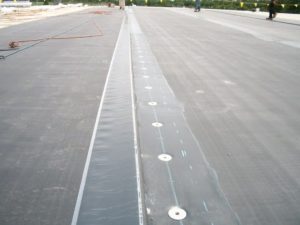
What is TPO roofing?

A flexible membrane.
A complete system.

Thermoplastic polyolefin, or TPO, is a single-ply roofing membrane used on low-slope commercial roofs. Sheets are joined with hot-air welded seams and integrated with insulation, cover board, air or vapour-control layers, flashings, drains and perimeter details.

Heat-welded seams

Light-coloured membrane

Multiple attachment methods

Repairable details

New and retrofit options

Commercial roof applications

TPO is not only the white sheet.

Long-term performance depends on substrate preparation, insulation, attachment, seam welding, drainage, curbs, penetrations and perimeter design working together.

Why property teams consider TPO

Designed for large
low-slope roofs.

The exact scope is matched to the roof system, building, season, access, condition and manufacturer requirements.

01

Roof Condition Inspection
Visible review of roofing, flashings, penetrations, drainage, roof edges and accessible interior evidence.

02

Seasonal Roof Maintenance

Spring and fall service focused on weather exposure, debris, drainage paths and developing defects.

03

Leak-Prevention Maintenance
Attention to vulnerable seams, laps, flashings, valleys, penetrations, curbs and transitions.

04

Gutter & Drainage Maintenance
Review of gutters, roof drains, scuppers, downspouts and overflow paths to help water leave the roof.

05

Flashing & Sealant Review

Inspection of metal flashings, counter flashings, compatible sealants and termination details.

06

Minor Roof Repairs
Condition-appropriate repairs to isolated roofing and detail defects identified during maintenance.

07

Debris & Roof-Surface Care
Safe removal planning for debris that traps moisture, obstructs drainage or creates service hazards.

08

After-Storm Roof Inspection
Review after significant wind, rain, snow or impact to identify displaced or damaged components.

09

Maintenance Plans & Reporting
Photo-backed observations, completed-service notes and prioritized recommendations for owners and teams.
Complete TPO roofing services

From specification to maintenance.

Commercial roofing support for new builds, occupied properties and existing roof assets.

01

New TPO Installation
Complete membrane systems for new commercial, industrial and multi-unit construction.

02

TPO Roof Replacement
Removal and renewal planning for aging or failing low-slope systems, including substrate and insulation review.

03

TPO Roof Recover
Assessment of existing conditions to determine whether a code-compliant, manufacturer-compatible recover is practical.

04

TPO Leak Repair
Investigation and localized repair of seams, punctures, flashings, drains, curbs, penetrations and perimeters.

05

Emergency Flat-Roof Repair
Stabilization and follow-up repair planning for active commercial water entry where safe access allows.

06

Preventive Maintenance
Scheduled inspections, drainage review, documentation and prioritized minor repairs.

07

Drainage Improvements
Review of drains, scuppers, overflow routes, tapered insulation and ponding-water conditions.

08

Roof-Curb & Penetration Work
Coordination for new HVAC equipment, pipes, supports, electrical work and rooftop changes.

09

TPO Inspections & Reports
Condition findings and repair priorities for building owners, managers, strata councils and consultants.
TPO roofing cost factors

What shapes the
investment?

Commercial pricing reflects the entire assembly, access and operating environment—not membrane square footage alone.

For useful budget pricing, provide

address, roof plans or approximate area, current system, leak history, desired timeline and any available reports.

Roof area & zones

Total size, elevation changes and separate roof sections.

Existing assembly

Removal, recovery, wet materials and disposal needs.

Insulation package

Thermal goals, layers, taper and fastening pattern.

Membrane selection

Thickness, reinforcement, colour and manufacturer system.

Attachment method

Adhesive, mechanical or induction-welded strategy.

Roof details

Drains, curbs, pipes, parapets, edges and expansion joints.

Access & logistics

Height, crane needs, loading areas and occupied spaces.

Phasing & schedule

Weather, business hours, tenant needs and project sequencing.

Commercial TPO FAQs

Technical answers for better planning.

Every assembly is project-specific, but these answers explain the decisions that commonly shape TPO work.
TPO is a reinforced thermoplastic single-ply membrane used on low-slope roofs. Membrane sheets are typically joined with hot-air welded seams and integrated with insulation, flashings, drains, curbs and perimeter details.
No single system fits every building. Deck type, interior humidity, roof geometry, drainage, rooftop traffic, wind design, existing materials and project goals should be reviewed before selecting TPO.
Fully adhered membrane is bonded across a compatible substrate. Mechanically attached systems use designed fastener and plate patterns, commonly within seam areas. Each has distinct substrate, wind, installation and appearance considerations.
A recover may be possible when the existing roof and deck are suitable, moisture conditions are understood, attachment can be achieved and details can be rebuilt correctly. Testing and project-specific review are important.
Overlapping membrane sheets are fused with controlled hot air. Surface preparation, machine settings, ambient conditions, speed and quality checks all influence seam consistency.
Often, yes. Localized damage can typically be cleaned, prepared and repaired with compatible membrane or accessories when the surrounding system remains serviceable.
Persistent water can increase dirt accumulation, stress details and signal drainage or structural-slope concerns. Drains, scuppers, tapered insulation and low areas should be reviewed rather than treating water as only a membrane issue.
A practical program commonly includes scheduled inspections and additional reviews after major storms or rooftop trade work. Frequency should reflect building risk, roof age, traffic and warranty requirements.
Helpful information includes the address, approximate roof area or plans, current assembly, leak history, roof access, equipment count, desired schedule and any reports or specifications.
The page is designed for building owners, property and facility managers, strata representatives, developers and general contractors needing assessment, budgeting, tendering, installation or maintenance support.

Maintenance for every property

Homes, Stratas & Commercial Buildings.

The inspection scope, communication and reporting should match the property and the people responsible for it.

Warehouses & Industrial

Large roof areas, repetitive details, extensive HVAC equipment and active loading operations.

Retail & Office

Occupied-building coordination, entrances, customer access, interior sensitivity and phased work.

Multi-Unit & Institutional

Resident or occupant communication, multiple roof zones, reporting and long-term budget planning.
  • Residential
  • Commercial
  • Exteriors
  • Contact